Image
Research
6 Columbia BME Students Named National Science Foundation Fellows
May 18, 2026
Camryn Hadley
Biomedical Engineering students elected to prestigious graduate fellowship program
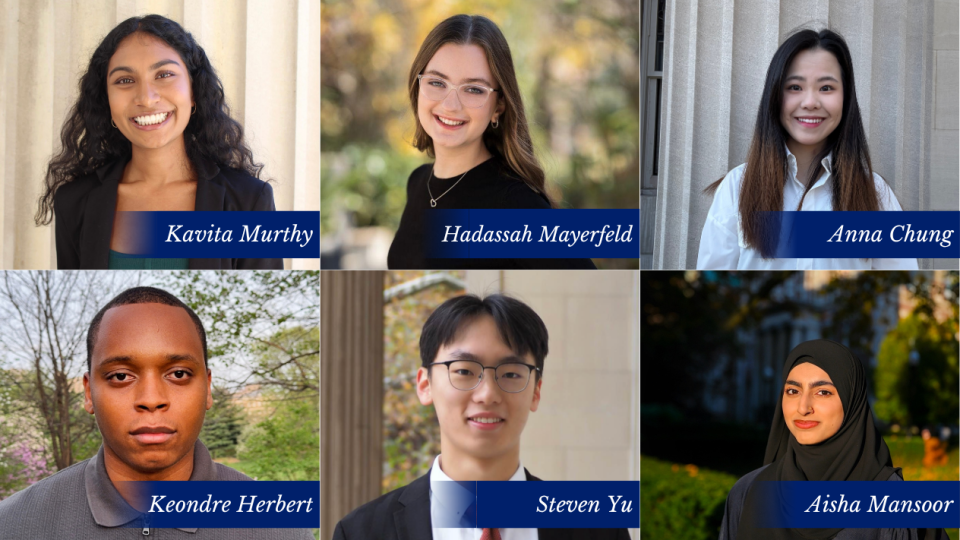
The National Science Foundation (NSF) recently announced 2,500 students have been selected to their Graduate Research Fellowship Program. Among them, six Columbia biomedical engineering students were selected.
This prestigious fellowship recognizes and supports outstanding graduate students who have demonstrated exceptional potential for significant research achievements in science and engineering. The students will receive three years of financial support and national recognition. The students were selected from an applicant pool of 14,000 nationwide. Each student was selected for their intellectual merit and contributions to active research.
Meet our winners below!
National Science Foundation Fellows
-
Kavita Murthy
Image
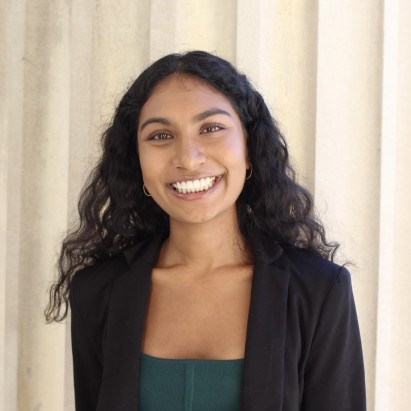
Originally from the California Bay Area, Kavita is a senior majoring in Biomedical Engineering with a minor in Entrepreneurship and Innovation. Her research work focuses on immunotherapies for infectious diseases, and she aims to continue in this direction throughout her career to reduce the gap in global health equity. The fellowship will assist Kavita in pursuing a PhD at the University of Cambridge, developing a multi-stage, multi-species vaccine for malaria.
-
Hadassah Mayerfeld
Image
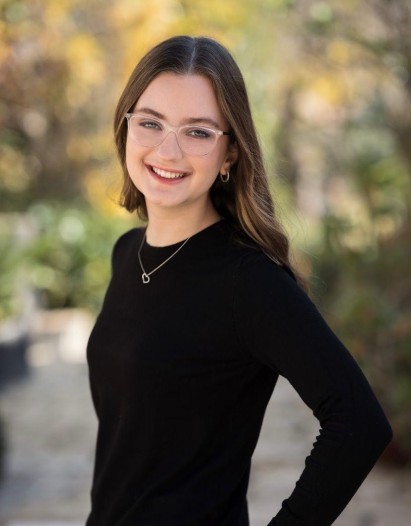
Hadassah is a first-year M.S./Ph.D. student in the Biomedical Engineering department. Mayerfeld completed her undergraduate studies at Yeshiva University, where she majored in Physical Sciences with a concentration in Biochemistry. Her current research focuses on the use of MRI to better understand and diagnose mild traumatic brain injury, and with a broader interest in the field of medical devices. She plans to use her fellowship to continue her MRI-focused research on mild traumatic brain injury — an area with significant unmet clinical need.
-
Steven Yu
Image
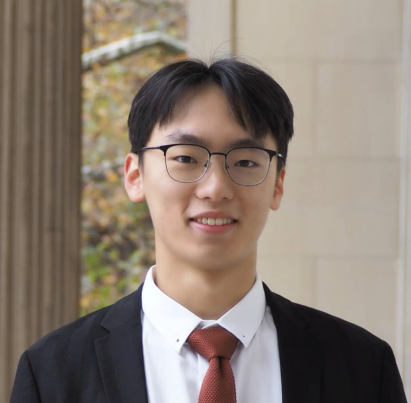
Originally from Jiangsu, China, Steven is majoring in biomedical engineering with a minor in computer science. Outside of the classroom, Steven works in the AlQuraishi Lab at Columbia's Irving Medical Center, where he is developing methods to predict protein conformational ensembles to better understand protein folding dynamics and potentially aid drug discovery. He has also conducted research at Cold Spring Harbor Laboratory in the Koo Lab, where he built deep learning models to study the regulatory grammar underlying gene expression.
This fall, Steven will begin his PhD in Computational and Systems Biology at MIT. This funding will support his continued research in computational biology as he transitions into his PhD program at MIT. Long-term, he aims to build an independent research program focused on developing computational and machine learning tools to better understand biological systems, with the ultimate goal of translating these insights into real therapeutic applications.
-
Anna Chung
Image
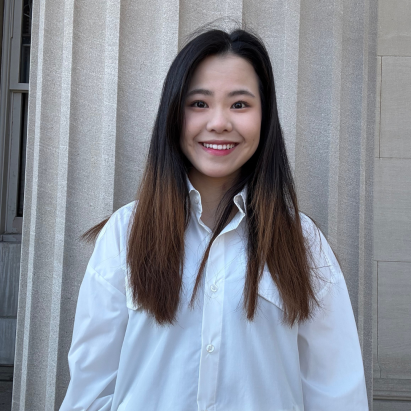
Anna is a BS/MS student in Biomedical Engineering at Columbia University, graduating spring 2026 with her Master’s degree. She will continue my training as a PhD student in Columbia BME in Dr. Alice Huang’s lab. Anna’s research interests lie in regenerative medicine, with a focus on uncovering the mechanisms that drive tissue repair and regeneration. Support from the NSF GRFP will enable her to pursue this work by investigating how these biological signals can be understood and harnessed to develop more effective, translatable therapies. Her ultimate goal is to bridge fundamental discovery and clinical application to improve patient outcomes.
-
Keondre Herbert
Image
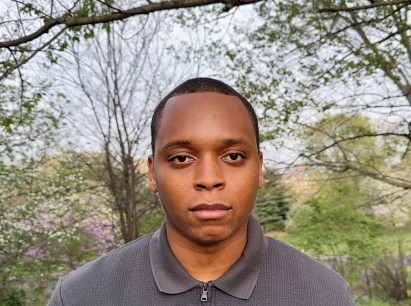
Keondre Herbert is from Antigua and Barbuda and is a 2024 graduate of Columbia BME, where he completed the neuroengineering track. While at Columbia, he worked in Dr. Barclay Morrison's lab on understanding the mechanisms of traumatic brain injury. Currently, he is a research associate in Dr. Peter Rudebeck's lab at the Icahn School of Medicine at Mount Sinai, using macaque electrophysiology and neuroimaging to investigate how deep brain stimulation treats psychiatric disorders such as OCD and depression. This fall, he will begin his PhD in Biomedical Engineering at Johns Hopkins, continuing in neuroengineering. The GRFP will support his doctoral research at JHU, where he plans to focus on translational neuroengineering. He is specifically interested in improving our understanding of how neuromodulation therapies act on the brain and working toward making them more effective and accessible for patients.
-
Aisha Mansoor
Image
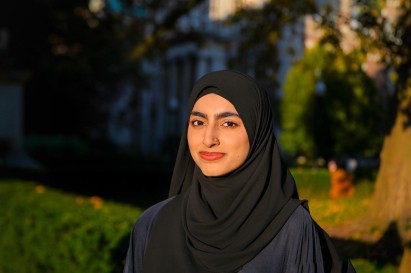
Aisha Mansoor is a Pakistani-American Muslim from Queens, New York, and a second-year Bridge-to-Ph.D. Scholar in the Department of Biomedical Engineering at Columbia University. She earned her B.A. in Chemistry with a concentration in Chemical Biology from Rutgers University in 2024. As an undergraduate, she conducted research in the lab of Prof. Ki-Bum Lee at Rutgers University, where she focused on cancer detection using CRISPR-based nucleic acid biosensing. These experiences shaped her interest in nanoparticle-based drug delivery systems. Currently, she works under Prof. Sam Sia at Columbia University, where she is developing ultrasound-responsive nanoparticles for targeted, on-demand drug release in wound healing applications. Motivated by the potential to advance targeted therapeutics, Aisha aims to design drug delivery platforms tailored to specific disease applications. This funding will support her Ph.D. in Bioengineering at the University of Pennsylvania in Prof. Michael Mitchell and Riccardo Gottardi’s labs, where she will be researching lipid nanoparticle-mediated drug delivery targeting musculoskeletal tissue. Her long-term goal is to pursue a career in academic research, where she can lead interdisciplinary efforts to develop innovative therapeutic technologies while also mentoring and training the next generation of scientists.