Faculty & Staff
Azizi and McFaline-Figueroa Labs Earn Prestigious Gray Foundation Award for BRCA Cancer Research
July 08, 2026
Camryn Hadley
Gray Foundation awards Columbia faculty funding over two years to advance AI-driven research on early detection and prevention of BRCA-related cancers
Elham Azizi, associate professor of biomedical engineering at Columbia Engineering and Herbert and Florence Irving Associate Professor of Cancer Data Research at The Irving Institute for Cancer Dynamics, has been named as one of 16 recipients of a Gray Foundation grant and will receive up to $500K in funding over two years to support research focused on the earliest stages of BRCA-related cancers.
The Gray Foundation focuses on accelerating research, improving treatment and raising awareness for individuals who have inherited BRCA (BReast CAncer) mutations. The grant was awarded to teams whose work utilizes the latest advances in technology and AI to research the prevention, early detection and interception of BRCA-related cancers, such as breast cancer or ovarian cancer. Additionally, this year’s teams will use machine learning and machine learning techniques to analyze data deposited in the Gray BRCA Pre-Cancer Atlas (the Atlas).
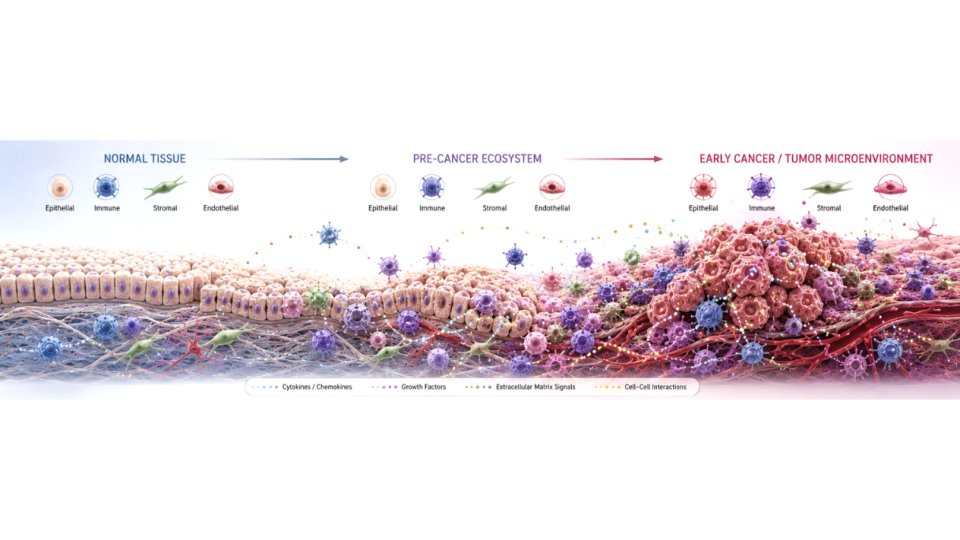
“This project aims to understand how cancer begins by studying the earliest interactions between cells before tumors can be detected,” says Azizi. “This support from the Gray Foundation will help us develop AI-driven, mechanism-aware models of the pre-cancer ecosystem dynamics.”
In collaboration with the McFaline-Figueroa Lab, the Azizi Lab’s project focuses on breast and gynecologic cancers linked to BRCA1 and BRCA2 gene mutations. The team aims to identify the earliest interactions between tumor cells, immune cells and the surrounding microenvironment during pre-cancer development while building AI models that can both detect and explain these interactions. By mapping normal and pre-cancerous tissue states, the goal is to uncover the earliest molecular and cellular changes that lead to cancer and better understand how BRCA-associated cancer begins.
Over the two-year period, the team will integrate single-cell, spatial and imaging data from the Gray BRCA Pre-Cancer Atlas and develop mechanism-aware AI models to learn interpretable representations of early tumor–immune ecosystem changes. Later, they will study how these early states progress toward cancer by inferring gene regulatory networks, mapping spatial cells and reconstructing progression within the AI framework.
The Gray Foundation grant will provide funding to support high-risk, high-reward research in early cancer biology. The award also provides a broader network of researchers and collaborative opportunities to further advance innovative approaches to understanding and preventing BRCA-related cancers.