Image
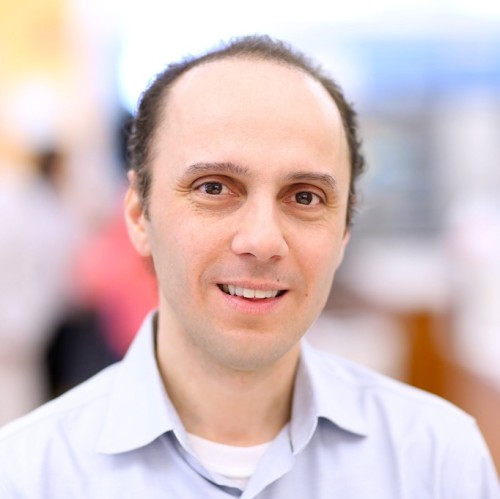
Stavros Thomopoulos
Robert E. Carroll and Jane Chace Carroll Professor; Professor of Biomechanics (in Orthopedic Surgery and Biomedical Engineering); Director of Carroll Laboratories for Orthopedic Surgery; Vice Chair of Basic Research in Orthopedic Surgery
Dr. Thomopoulos studies the development and regeneration of the tendon-to-bone attachment.
The attachment of dissimilar materials is a major challenge because of the high levels of localized stress that develop at such interfaces. An effective biologic solution to this problem can be seen at the attachment of tendon (a compliant, structural “soft tissue”) to bone (a stiff, structural “hard tissue”). The enthesis, a transitional tissue that exists between uninjured tendon and bone, is not recreated during healing, so surgical reattachment of these two dissimilar biologic materials often fails (e.g., recurrent tears after rotator cuff repair range from 20% to 94%, depending on the patient population. To develop successful strategies for tendon-to-bone repair, necessary for rotator cuff repair and anterior cruciate ligament reconstruction, the Thomopoulos lab seeks to first understand the mechanisms by which the healthy attachment transfers load between tendon and bone, and how cells build a functional attachment during development. In order to achieve these goals, they are focusing on:
- Understanding the structure-function relationships that allow for effective load transfer at the healthy enthesis
- Determining the biophysical and molecular cues that drive the development of the enthesis
- Developing regenerative medicine strategies motivated by structure-function and developmental biology results
- Applying these strategies to improve tendon-to-bone healing.
Dr. Thomopoulos holds a bachelor's degree in mechanical engineering from Columbia University, and Masters of Science degrees in both mechanical engineering and biomedical engineering from the University of Michigan. He completed his doctoral studies in biomedical engineering in 2001 through the University of Michigan. After a two-year postdoctoral fellowship at Columbia University in Biomedical Engineering, he started a faculty position at Washington University in 2003. Dr. Thomopoulos joined Columbia University in 2015 as a full professor and the director of the Carroll Laboratories.
Research Areas
- Development, structure-function, repair, and regeneration of the tendon-to-bone attachment
Additional Information
-
Professional Affiliations
- Orthopaedic Research Society
- American Society of Mechanical Engineers
-
Honors & Awards
- Van C. Mow Medal (American Society of Mechanical Engineers) 2020
- Fellow of the American Society of Mechanical Engineers (ASME) 2018
- Fellow of International Orthopaedic Research (International Combined Orthopaedic Research Societies - ICORS) 2018
- Fellow of The American Institute for Medical and Biological Engineering (AIMBE) 2017
- Neer Award for Basic Science Research in the Shoulder (American Shoulder and Elbow Surgeons Society) 2009
- Kappa Delta Young Investigator Award (American Academy of Orthopaedic Surgeons) 2009
- Y.C. Fung Young Investigator Medal (American Society of Mechanical Engineers) 2007
- Neer Award for Basic Science Research in the Shoulder (American Shoulder and Elbow Surgeons Society) 1999
- Hughston Award for Basic Science Research (American Orthopaedic Society for Sports Medicine) 1999
-
Professional Experience
- Robert E. Carroll and Jane Chace Carroll Professor, Columbia University, 2017-
- Professor of Biomechanics (in Orthopaedic Surgery and Biomedical Engineering) (with tenure), Columbia University (New York, NY)
- Vice Chair for Basic Research, Orthopaedic Surgery, Columbia University, 2015-
- Director of Robert Carroll & Jane Chace Carroll Laboratories, Orthopaedic Surgery, Columbia University (New York, NY), 2015-
- Professor of Biomechanics (in Orthopaedic Surgery and Biomedical Engineeri
-
Education
- PhD, Biomedical Engineering, University of Michigan
- MS, Biomedical Engineering, University of Michigan
- MS, Mechanical Engineering, University of Michigan
- BS, Mechanical Engineering, Columbia University