Image
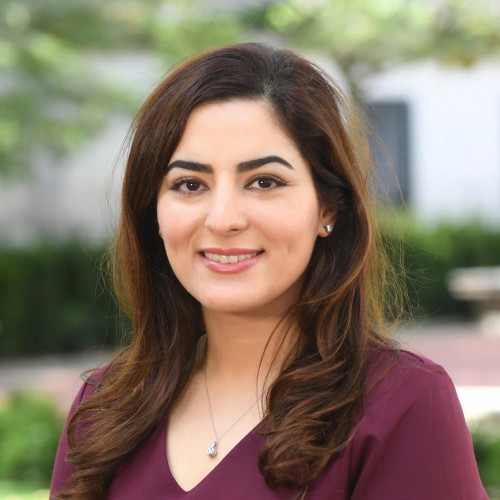
Elham Azizi
Associate Professor of Biomedical Engineering and Herbert and Florence Irving Associate Professor of Cancer Data Research (in the Herbert and Florence Irving Institute for Cancer Dynamics and in the Herbert Irving Comprehensive Cancer Center)
Elham Azizi’s multidisciplinary research utilizes novel machine learning, artificial intelligence (AI), statistical modeling, and cutting-edge single-cell and spatial genomics to decode how tumors evolve, resist therapies, and evade the immune system.
By integrating information across genomic, spatial, and imaging modalities, the Azizi Lab reconstructs the rules governing tumor ecosystems directly from patient data. The group designs AI and statistical methods that integrate multi-modal single-cell, spatial, imaging, and perturbation data to identify mechanisms of cellular plasticity, predict immunotherapy responses, and guide experimentally testable hypotheses for improving patient outcomes. These computational models provide interpretable, mechanistically grounded insights into how cancer, immune, and stromal cells communicate and adapt, informing the design of more precise and durable therapies.
Azizi holds a BSc in Electrical Engineering from Sharif University of Technology (2008), and an MSc in Electrical Engineering (2010) and PhD in Bioinformatics (2014) from Boston University. She was a postdoctoral fellow at Columbia University and Memorial Sloan Kettering Cancer Center (2014–2019) before joining the faculty of Columbia Biomedical Engineering and the Irving Institute for Cancer Dynamics in 2020. She is also affiliated with the Department of Computer Science, Data Science Institute, and the Herbert Irving Comprehensive Cancer Center. She is also affiliated with the Department of Computer Science, Data Science Institute, and the Herbert Irving Comprehensive Cancer Center. She is a recipient of the Vilcek Prize for Creative Promise in Biomedical Science, Takeda/NYAS Early-Career Innovator in Science Award, Allen Distinguished Investigator Award, Chan Zuckerberg Initiative SDL Award, NSF CAREER Award, Tri-Institutional Breakout Prize for Junior Investigators, NIH NCI Pathway to Independence Award, American Cancer Society Postdoctoral Fellowship, and IBM Best Paper Award at the New England Statistics Symposium.
Research Areas
- Bioinformatics
- Cell & Tissue Engineering
- Genomics and Computational Modeling
- Personalized Medicine and Patient-specific Modeling
- Systems Biology and Synthetic Biology
- Computational Biology
- Artificial Intelligence
- Causal Inference
- Biology
Additional Information
-
Professional Affiliations
- American Association for Cancer Research (AACR) 2017- International Society for Computational Biology (ISCB) 2020
-
Honors & Awards
- Vilcek Prize for Creative Promise in Biomedical Science, 2025.
- Early-Career Innovator in Science Award in Cancer Immunology, Takeda and the New York Academy of Sciences, 2024.
- Allen Distinguished Investigator Award, Allen Institute, 2023.
- NHGRI Award for Supporting Talented Early Career Researchers in Genomics (R01), 2023.
- CZI Science Leadership Award, Chan Zuckerberg Initiative and the National Academies of Sciences, Engineering, and Medicine, 2022.
- NSF CAREER Award, 2022.
- Columbia Research Initiatives in Science & Engineering (RISE) Award, 2021.
- Tri-Institutional Breakout Prize for Junior Investigators, Weill Cornell Medicine, Rockefeller University, and Memorial Sloan Kettering Cancer Center, 2019.
- NIH NCI Pathway to Independence Award (K99/R00), 2018.
- American Cancer Society Postdoctoral Fellowship, 2017.
- IBM Best Student Paper Award, New England Statistics Symposium (NESS), 2014.
- TEDMED Front Line Scholarship, 2014.
-
Professional Experience
- Herbert & Florence Irving Associate Professor of Cancer Data Research, Columbia University, 2025 - present
- Associate Professor, Department of Biomedical Engineering, Columbia University, 2025 - present
- Affiliated Faculty, Department of Computer Science, Columbia University, 2020 - present
- Affiliated Member, Data Science Institute, Columbia University, 2020 - present
- Member, Herbert Irving Comprehensive Cancer Center, Columbia University, 2020 - present
- Herbert & Florence Irving Assistant Professor of Cancer Data Research (in the Irving Institute for Cancer Dynamics), Columbia University, 2020 - 2024
- Assistant Professor, Department of Biomedical Engineering, Columbia University, 2020 - 2024
- Postdoctoral Research Fellow, Memorial Sloan Kettering Cancer Center, Mentor: Dr. Dana Pe’er, 2016 - 2019
- Postdoctoral Research Scientist, Department of Biological Sciences, Columbia University, Dr. Dana Pe’er (moved to MSK), 2014 - 2016
- Research Intern, Microsoft Research, Redmond, WA, Dr. Bill Bolosky. Summer 2014
- Visiting Researcher, Department of Statistics, Harvard University, Cambridge, MA, Dr. Edoardo Airoldi, 2013-2014
- Research Assistant, Department of Biomedical Engineering, Boston University, Boston, MA, Dr. James Galagan. 2010-2014
-
Education
- PhD, Bioinformatics, Boston University
- MS, Electrical Engineering, Boston University
- BS, Electrical Engineering, Sharif University of Technology
Elham Azizi in the News
Faculty & Staff
Azizi and McFaline-Figueroa Labs Earn Prestigious Gray Foundation Award for BRCA Cancer Research
Jul 08, 2026